Need furnace repair services in Sayreville?
- Independent local HVAC providers in our network
- Clear questions to ask every provider
- Extra care tips for older houses
- Request an estimate, no obligation
No obligation
Request an estimate for furnace repair
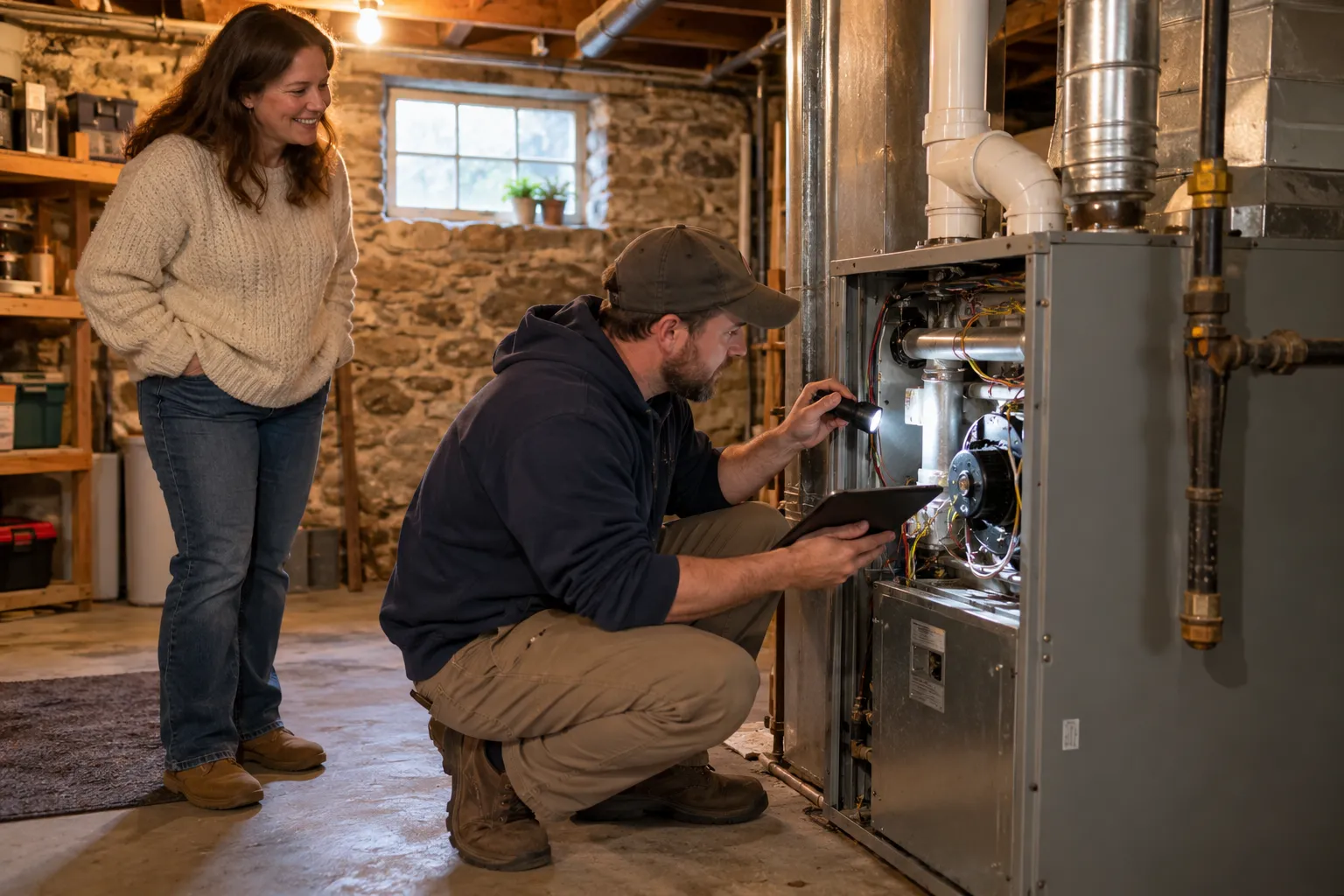
A furnace that quits on a cold night is stressful. It may blow cool air, bang loudly, or sit silent. Furnace repair covers the fixes that bring a working system back, from a worn igniter to a failed blower motor. Where winters are cold and snowy, a furnace runs for months, so parts wear out. Eubegins Heating & Air is a referral service. It does not do the repairs. It connects you with independent local providers.
Older houses add twists. A basement furnace may sit beside aging ductwork, past patch jobs, or a flue shared with another unit. Ask before you hire. Get clear answers first, then choose a provider who explains the problem in plain words and puts the quote in writing. Request an estimate to start the conversation, with no obligation to move forward.
Say you come home and the house smells like rotten eggs. Do not flip a switch. Do not light anything. Do not use a phone inside. Walk out, leave the door open behind you, and move away from the house.
Call the gas utility or emergency services from outside. A furnace provider can look at the system after the home is cleared.
Say the alarm wakes you at night. Headaches, dizziness, or nausea may come with it. Get everyone, pets included, into fresh air and call emergency services. Do not go back in until responders say it is safe.
Say you wake up and the house is chilly. The furnace is quiet. Before you worry, try a few simple things:
If none of that works, stop there. Do not open panels or reset things again and again.
Request a callback to check provider availability in your area.
Some problems announce themselves. Others creep in over weeks.
Say your home is an older Cape Cod or a multi-family building with a stone and block foundation. The furnace sits in a tight corner of a damp basement. Behind it, there may be ductwork added in three different decades.
Surprises are common in homes like this. A rusted flue, a patched duct, or old wrap on pipes can change a simple job. Tell the provider the age of your home up front. Ask whether they will check the venting and whether older materials need testing before work begins.
In a multi-family building, ask who owns the shared parts, such as a common chimney.
A good visit follows a pattern. The provider asks what you noticed, checks the thermostat, and inspects the filter, burners, and venting. Then they test the safety controls and run the system through a heating cycle.
You should hear what they found, what it will take to fix, and what it costs, before any parts are ordered.
Most fixes fall into a short list:
Cracks in the heat exchanger are different. A provider who finds one should show you, and explain your options clearly.
Say a provider arrives, glances at the unit, and says, "You need a new one." That is a moment to pause. A few questions help you hold the conversation steady.
Clear answers first. A solid provider names the failed part, explains why it failed, and gives a price in writing. They are comfortable if you ask for time to think.
Want a provider who will answer these questions? Request an estimate and compare.
Say your furnace is 18 years old and the repair quote is large. Ask the provider to compare the repair cost with the cost of a new unit. Ask how many repairs the furnace has had lately.
Many people type "furnace replacement near me" after a second or third breakdown in a few winters. If the heat exchanger is cracked, replacement is often the safer path. If the fix is small and the unit is otherwise sound, repair usually makes sense.
Cold snowy winters and spring snowmelt are hard on equipment. Snow can bury exhaust pipes. Damp basements can rust parts. Coastal storms can knock out power and trip safety controls.
The same HVAC service provider who handles heating and cooling checks in fall may also help with emergency AC repair when summer hits.
A warm house starts with one clear conversation. Request a callback to ask about provider availability and next steps.
Providers look at venting, burners, and safety controls so the system runs safely, not just warmly.
A provider finds the failed part, explains why it failed, and quotes the fix in writing.
Igniters, motors, sensors, and boards can be replaced to get your heat running again.
If the unit is worn out, a provider can explain repair and replacement choices side by side.
Prices vary by furnace type, part, and how hard the unit is to reach. These are typical U.S. ranges only. Always get a written quote before work begins.
| Repair item | Typical range | Notes |
|---|---|---|
| Diagnostic visit | $75 – $200 | Some providers apply it to the repair |
| Igniter or flame sensor | $100 – $350 | Common cause of no-heat calls |
| Thermostat repair or swap | $100 – $400 | Smart models cost more |
| Inducer motor | $400 – $1,000 | Part and access affect price |
| Blower motor | $400 – $1,500 | Varies by motor type |
| Control board | $300 – $900 | Depends on make and age |
Tell us what you notice: no heat, odd noises, or short cycling. Mention how old your home is.
Your request goes to an independent provider in our network who services your area.
The provider checks the furnace and explains what failed and what it takes to fix.
Review the written quote, ask your questions, and move forward only if you are comfortable.
Know the right questions, then hear how each provider answers them before you pick anyone.
A good provider explains the problem in plain words and puts prices in writing.
Tell providers your home's age so hidden surprises are planned for early.
You choose from local providers in our network. Eubegins Heating & Air does not do the work.
Common causes include a dirty filter, a failing igniter or flame sensor, a blower problem, or a thermostat issue. Try the quick checks first. If heat is still weak, ask a provider to inspect it.
Most repairs run from about $100 to over $1,500, depending on the part and labor. Ranges vary by job, so ask for a written quote before work starts.
It depends on age, repair cost, and safety. A cracked heat exchanger or repeated breakdowns often point to replacement. Ask the provider to compare both options in writing.
Have a question, a warm AC or a cold furnace? Send a request through the form and a provider in our network can follow up with next steps and an estimate.
No obligation