Need ac repair in Sayreville?
- Independent local HVAC providers in our network
- Clear questions to ask every provider
- Extra care tips for older houses
- Request an estimate, no obligation
No obligation
Request an estimate today
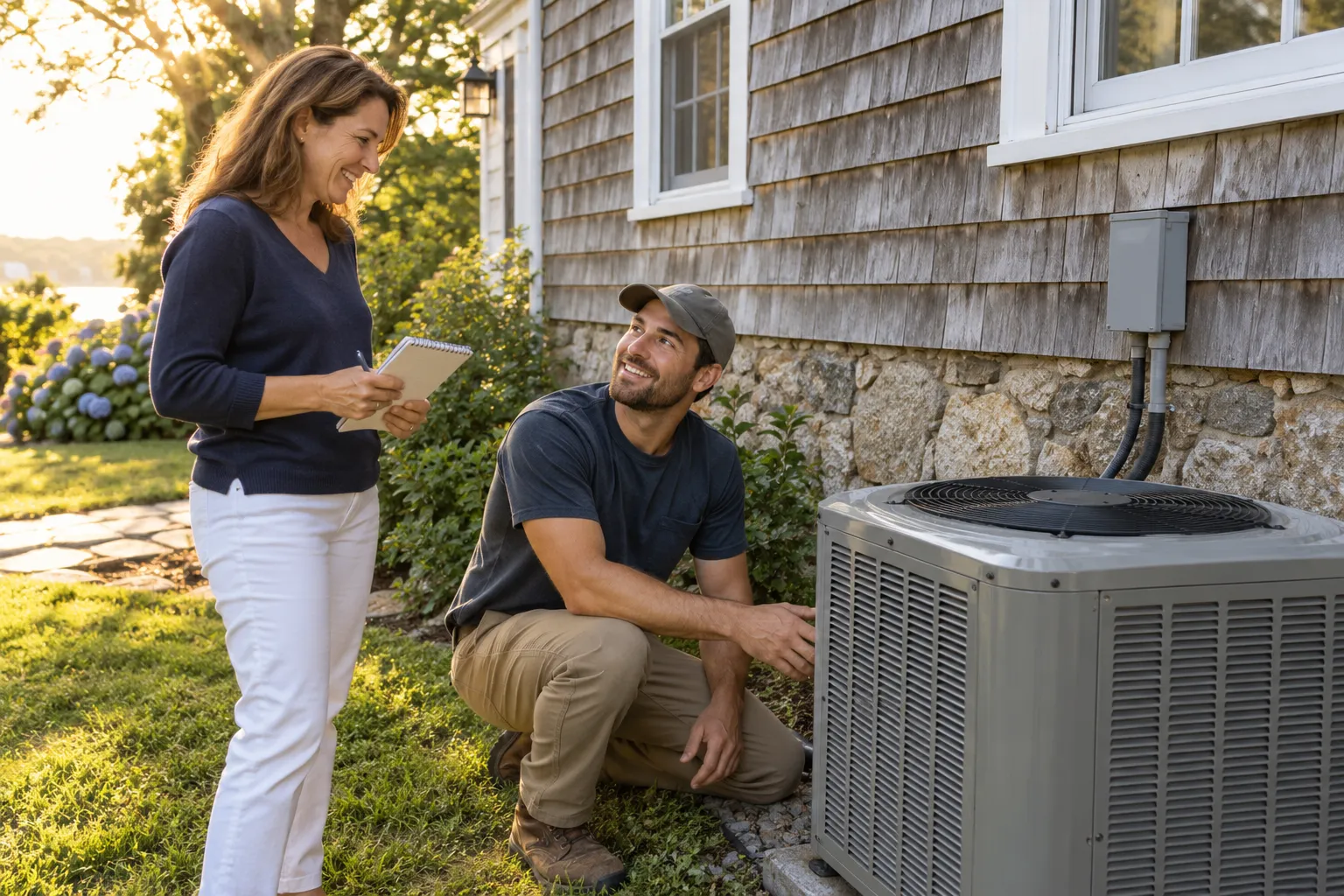
Say you come home on a hot evening and the vents blow warm air. The house feels like a parked car. You want it fixed, but you also want to avoid a bad deal. That is a normal worry, and it is why this page exists.
Eubegins Heating & Air is a referral service. We do not do the repair. We connect homeowners in Sayreville and the Sayreville area with independent providers in our network who handle AC repair. Here you will find quick checks, signs of trouble, the questions to ask, what a good answer sounds like, and red flags to watch for. Older homes get extra attention, since past fixes and hidden surprises can change the job. Ask before you hire, and expect clear answers first.
Say you come home and the house feels stuffy. The thermostat says cool, but the air from the vents feels warm. Take a breath. A few simple checks may help, and they also give a provider useful clues.
Turn the system off if you smell burning, hear grinding, or see water near electrical parts. Running a struggling AC can turn a small fix into a big one. Request a callback to check provider availability. Many providers can respond quickly when a system is in trouble, though hours vary.
Say it is a heat wave and someone at home is elderly, very young or in poor health. That changes things. Emergency AC repair is about safety, not just comfort. Tell the provider who lives in the home and how hot it is inside. A good provider will ask about that. If anyone feels dizzy or unwell, cool them down and get medical help first.
Say the unit got louder a few weeks ago. Then the bills crept up. Now it runs all afternoon. Small hints like these often come before a breakdown.
Cold snowy winters, damp springs and coastal storms are hard on outdoor units. Ice, snowmelt and salty air wear on coils, fans and wiring while the unit sits idle. Then the first hot day arrives and the weak part gives out. A spring check can catch trouble before then.
Say your home is decades old, maybe a Cape Cod or a multi-family with a stone and block foundation. Past owners may have patched the system more than once. Ducts can be tight, basements cramped and wiring dated. A provider should look at the whole setup, not only the broken part.
Ask if they check the ductwork, the electrical panel and the condensate drain. Hidden surprises are common in older homes. Ask the provider to explain any new finding before more work begins.
The provider asks what you saw and heard, and when it started. Share every detail, even small ones.
Next they check the thermostat, filter, electrical parts, refrigerant lines, coils and drain. They test airflow and pressure to find the real cause.
Before work starts, you should get the problem and the price in writing. A good answer sounds like this: here is what failed, here is the part, here is the cost.
Say the unit is 14 years old and this is the second repair in two summers. Another fix may only buy a little time. A common rule: if the repair costs about half of a new system and the unit is old, talk about replacement. Older units may also use refrigerant that is costly to service. Ask the provider for both options in writing, then compare calmly.
If you hear two or more of these, pause. Clear answers first. You can always ask another provider.
Some policies may cover sudden damage, such as a power surge or storm harm. Wear and age are usually not covered. Check your policy. Providers can often help document damage for a claim.
Eubegins Heating & Air is a referral service, not a repair company. We match homeowners with independent providers in our network, and the provider you choose does the work and sets the price. Use your questions, compare answers, and pick the one who makes sense.
A provider checks airflow, electrical parts and refrigerant to find the true cause, not just the symptom.
Worn capacitors, motors and switches can often be replaced on the visit.
Providers can address refrigerant leaks, frozen coils and clogged drain lines that cause shutoffs.
Expect the problem, the repair price and any replacement option explained in writing before work starts.
Prices vary by home, brand, parts and how hard the unit is to reach. These are typical U.S. ranges, not offers. Always get a written quote that lists parts and labor before you agree.
| Repair item | Typical range | Notes |
|---|---|---|
| Diagnostic visit | $75 – $200 | Some providers apply it toward the repair |
| Capacitor or contactor | $120 – $450 | Common, small electrical part |
| Fan motor replacement | $350 – $900 | Outdoor or indoor motor |
| Refrigerant leak repair | $250 – $1,600 | Depends on leak location and refrigerant type |
| Drain line clearing | $100 – $350 | Prevents water damage and shutoffs |
| Compressor replacement | $1,200 – $3,500 | Often leads to a repair or replace talk |
Tell us what you noticed, such as warm air, noises or leaks, and where your home is.
We connect you with an independent provider in our network who handles AC repair.
Use our list to ask about licensing, quotes, warranty and older home experience.
Review the price in writing, then choose whether to go ahead.
We share the questions to ask and what a solid answer sounds like, so you feel ready before anyone arrives.
You are connected with local providers in our network who do the work themselves.
Past repairs and hidden surprises matter, so we point you to providers used to older houses.
Request an estimate, compare answers and decide at your own pace with no obligation.
Common causes include a dirty filter, a frozen coil, low refrigerant or a failed electrical part. Check the filter and thermostat first. If the air stays warm, turn the unit off and ask a provider to look.
Many repairs fall between about $150 and $1,600 in the U.S., depending on the part and the job. Ask for a written quote before work begins, so you know the price.
If the unit is old and the repair costs about half of a new system, replacement may make sense. Ask the provider for both options in writing before you choose.
Have a question, a warm AC or a cold furnace? Send a request through the form and a provider in our network can follow up with next steps and an estimate.
No obligation